

Congratulations to our LEAD Program graduates
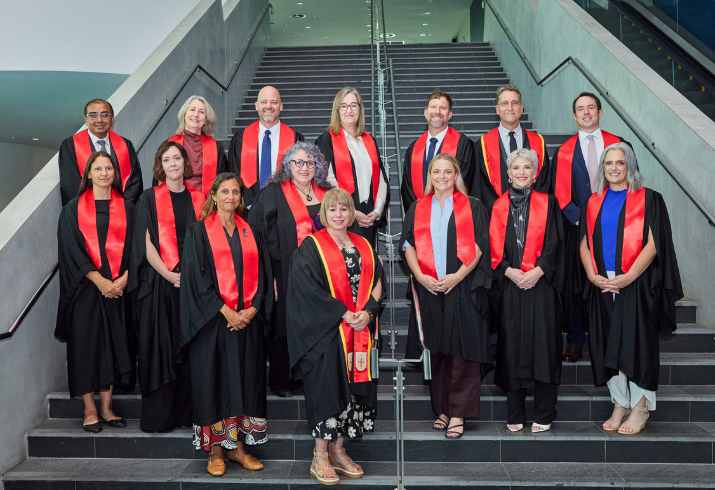
Sixteen of our emerging leaders are putting their newly honed leadership and management skills to good use after completing WA Country Health Service’s LEAD professional development program.
The group – the second cohort to finish the two-year program – were acknowledged and celebrated at a graduation ceremony at Perth Convention and Exhibition Centre on 11 February.
Speaking on the night, WA Country Health Service Chief Executive Jeff Moffet congratulated the graduates for their commitment to growing as leaders and delivering safe, accessible care to country communities throughout WA.
“Leadership in country health is unique; it requires versatility, resilience, cultural competency, deep listening, and the ability to build trust in every direction,” he said.
“Our communities – which are sometimes separated by hundreds of kilometres – depend on us, not only for care, but for stability, connection, and continuity. That’s why programs like LEAD matter.”
LEAD (Leadership, Exploration and Development) supports WA Country Health Service employees in senior management and leadership positions to complete a Graduate Diploma of Health Leadership and Management through the University of New South Wales.
Other highlights include attending the Asia Pacific Health Leadership Congress, professional development workshops through the Australasian College of Health Service Management (ACHSM), membership with ACHSM for the duration of the program, and personalised mentoring.
Participants develop the tools to identify and address emerging healthcare opportunities and challenges, drive strategic improvements, and enhance service delivery to patients, families, carers and communities across the WA Health system.
Among the latest graduates was Dr Fred English, Head of the Medical Retrieval Department at the WA Country Health Service Command Centre, who delivered a memorable speech on behalf of the cohort.
“For me, the value isn’t in what we learned,” he said.
“It’s in the quality of the questions we now ask. It’s in the honesty of the conversations we’re now willing to have. It’s in the trust we’ve built with people we didn’t know two years ago.
“Those relationships will endure. They’ll mature sustained partnerships which will improve the lives of people in country communities. And that’s the gig: ‘to deliver and advance high-quality care for country communities.”