

F.A.S.T thinking saved Bunbury resident
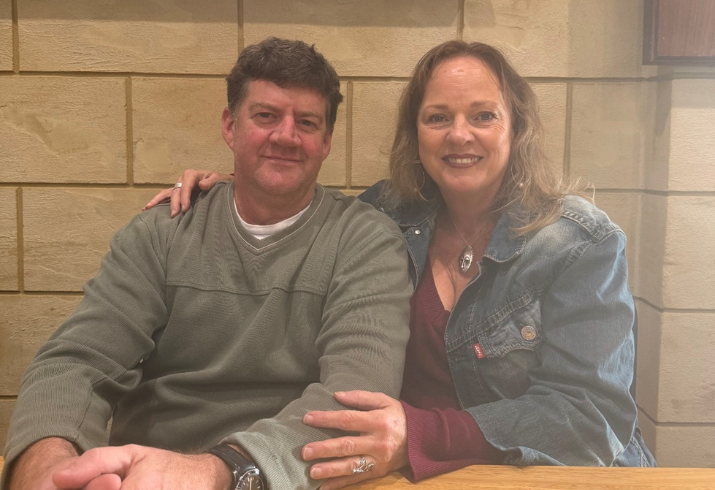
When Bunbury resident Kerry suddenly collapsed, her husband immediately rushed to her aid. Realising the seriousness of her symptoms, he called triple zero and the Bunbury Regional Hospital took it from there.
This National Stroke Week (3 - 9 August), Kerry shares her story to remind others that knowing the signs of a stroke and acting quickly can save a life.
It was a typical day for Kerry until she collapsed while in the shower. With no warning signs and no experience of these symptoms prior, a stroke was the last thing she thought she was having.
“I got in the shower and the next thing I knew I was on the ground - I had no idea what was going on,” she said.
Her husband heard her collapse, rushed in to see what had happened, and realised something wasn’t right.
Once he sat her down, she couldn’t move her body, her words then became slurred - that’s when he immediately rang triple zero.
Kerry was then rushed to Bunbury Regional Hospital by ambulance.
Once arrived, clinicians at the local hospital assessed her and linked in with the 24/7 Telestroke service to consult with a specialist stroke neurologist. Tests confirmed she had suffered a stroke.
Following the assessment, it was recommended that Kerry be transferred to Perth for surgery and returned home five days later.
South West Stroke Coordinator Renee Dehring said strokes are very serious and should be treated immediately.
“Everyone worked together quickly to get Kerry the care she needed,” she said.
“Strokes are a serious medical emergency, so it is incredibly important that everyone knows the signs and understands what to do when a stroke occurs.”
Thanks to her husband's quick actions, Kerry was able to receive time-critical stroke treatment sooner, helping her make a faster recovery.
Kerry acknowledges all the staff who cared for her and encourages others to learn the signs of stroke.
“I can’t thank them enough for what they did,” she added.
“It’s very important to know the signs - it could save a life.
“Who knows where I would be now if I had left it longer without getting help.”
For Kerry, she also continued rehabilitation through outpatient stroke occupational therapy at Bunbury Regional Hospital, which has helped regain her confidence and independence again.
Now recovering, Kerry is looking forward to spending more time with her husband of 22 years and their three children.
The Stroke Foundation recommends the F.A.S.T test as an easy way to remember the most common signs of a stroke. Using the F.A.S.T test involves asking these simple questions.
- Face – Check their face. Has their mouth drooped?
- Arms – Can they lift both arms?
- Speech – Is their speech slurred? Do they understand you?
- Time – Is critical. If you see any of these signs, call 000 straight away.
A stroke is always a medical emergency.