

Moving cultural responsibility beyond Aboriginal staff
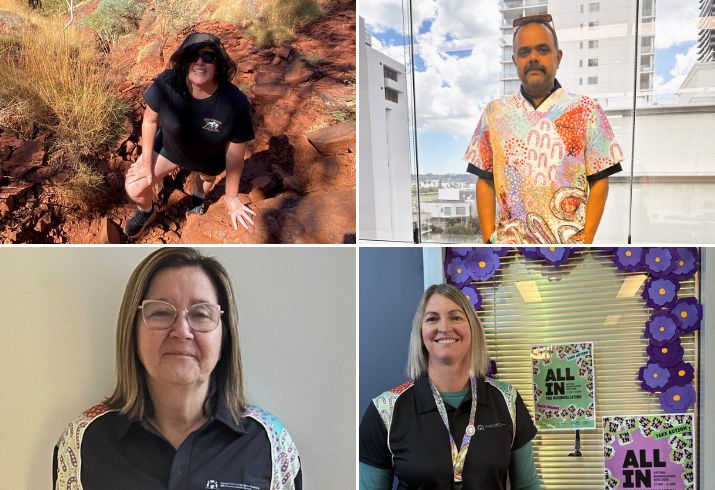 (L-R, top to bottom) Daniella, Hari, Martine, Donna
Say hello to Hari, Daniella, Martine and Donna – four of our Aboriginal Health Champions Program (AHCP) participants.
Nominated for the program by Aboriginal staff, consumers or members of the community, these staff are helping WA Country Health Service ensure Aboriginal people receive culturally safe and responsive healthcare every time they access our services.
With 18 participants already inducted, we have invited Hari, Daniella, Martine and Donna to share their thoughts on why the ACHP is so important in driving cultural change in healthcare delivery across the regions.
Regional Community Health Manager – Geraldton, Hari
What does being nominated as an AHCP participant mean to you?
To be nominated by Aboriginal colleagues is one of the proudest moments of my 34 years in health. An opportunity to be able to be a voice of support for Aboriginal communities is an honour. It is a powerful statement of commitment to improving health outcomes for Aboriginal and Torres Strait Islander people.
How does having participants in the AHCP make a difference to Aboriginal community members?
Building trust between the community and healthcare system, as well being the driver for change by increasing culturally appropriate service delivery.
How does having participants in the AHCP make difference to Aboriginal staff across WACHS?
By advocating for Aboriginal employment and retention of Aboriginal staff. By driving organisational change and providing mentorship where necessary.
Consultant Service Planning and Development – Central Office, Daniella
Why is it important for our organisation to have participants in the Aboriginal Health Champions Program?
It creates space for staff to lead cultural change in practical and meaningful ways.
Participants can challenge the mindset of ‘the way things have always been done’, and encourage more culturally safe, respectful and responsive approaches across the organisation. The program also strengthens collective leadership, accountability and shared responsibility for improving Aboriginal health outcomes and experiences within WACHS.
What is something you have learned since becoming involved in the Aboriginal Health Champions Program?
One of the biggest learnings has been recognising how different every participant is. We all bring unique experiences, backgrounds, professional roles, and strengths, yet we are united by shared values of equity, respect, kindness, integrity, empathy, and a genuine commitment to improving outcomes for Aboriginal people. It has reinforced that cultural leadership can look different for everyone, and that diversity of perspectives strengthens the program.
Personal Assistant to the Director of Population Health – Bunbury, Martine
Why is it important for our organisation to have participants in the Aboriginal Health Champions Program?
Being nominated as an AHCP participant means being trusted to represent and advocate for Aboriginal people. It is both an honour and a responsibility.
To me, it means contributing to culturally safe practices, supporting Aboriginal staff and community members, and helping ensure Aboriginal perspectives are included in conversations and decision-making across the organisation.
Why is it important for our organisation to have participants in the Aboriginal Health Champions Program?
AHCP participants are important because they ensure Aboriginal voices and lived experiences are represented within WACHS.
They help improve cultural safety, strengthen relationships with communities, and support services to be more culturally responsive as well as providing guidance and advocacy that can contribute to better experiences and health outcomes for Aboriginal people.
Population Health Coordinator – Katanning, Donna
What is something you have learned since becoming involved in the Aboriginal Health Champions Program?
I was ignorant to the 17 Closing the Gap Targets. These highlight the disparities faced by First Nations people and why we need to do better. WACHS is well placed to have an impact on the health of our Aboriginal community members and work towards achieving these targets.
How does having participants in the AHCP make a difference to Aboriginal community members?
It’s early days, but my hope is that they feel more comfortable engaging with health practitioners in the community, whether it be a therapist in a school or a clinician coming to their home.
How does having participants in the AHCP make difference to Aboriginal staff across WACHS?
To know that they’re not alone in the quest to end racism. We all have a part to play and supporting our Aboriginal colleagues is paramount to making a difference.
Thank you to Hari, Daniella, Martine and Donna for taking accountability and recognising that creating a culturally safe environment for Aboriginal communities and staff is everyone’s responsibility.
We would also like to thank Aboriginal staff across WA Country Health Service for their continued support, mentorship and knowledge-sharing with our AHCP participants.
If you identify as Aboriginal or Torres Strait Islander and would like to nominate a non-Aboriginal WA Country Health Service staff member who has provided you with culturally safe care click here.