

Telestroke milestone strengthens access to lifesaving care
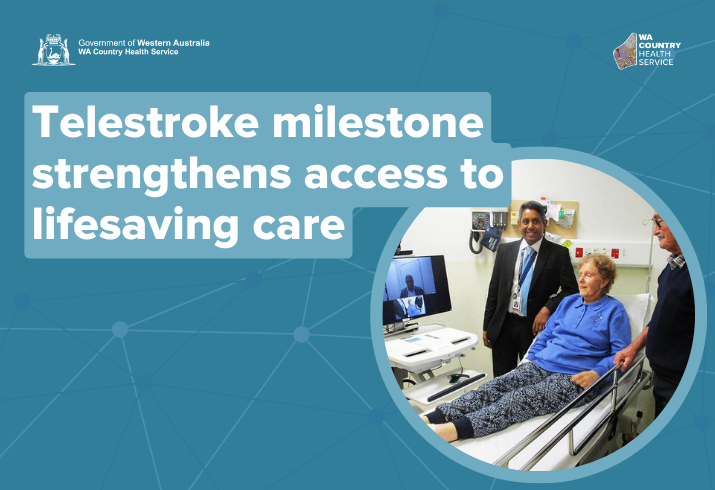
More than 5,000 Western Australians have received specialist stroke assessments through the State's Telestroke Service, improving access to time-critical care for people living in regional and remote communities.
Available 24 hours a day, seven days a week, the service connects clinicians in regional hospitals with metropolitan stroke specialists via Telehealth.
Specialists can review brain imaging, assess patients and their symptoms, and support rapid treatment decisions when every minute counts.
The WA Telestroke Service is available State-wide, with demand steadily increasing since it expanded to 24/7 operations on 31 July 2023.
Over the past three months, the service has averaged more than 32 referrals a week and recently recorded its busiest week, with 49 consultations.
To meet growing demand, the number of doctors rostered to Telestroke has more than doubled since the service began five years ago.
The South West and Great Southern account for more than half of all referrals, reflecting strong uptake of the service across regional Western Australia.
By allowing more patients to be assessed and treated closer to home, Telestroke can reduce the need for transfers to metropolitan hospitals and support better outcomes for people in regional and remote areas.
Stroke is a medical emergency that occurs when blood supply to the brain is interrupted by either a blocked or burst blood vessel.
Recognising the signs of stroke and seeking treatment immediately can significantly improve a person's chances of survival and recovery.
Western Australians are encouraged to remember the F.A.S.T. signs of stroke:
-
Face - Has their face drooped?
-
Arms - Can they lift both arms?
-
Speech - Is their speech slurred or difficult to understand?
-
Time - Call Triple Zero (000) immediately.