

Flowers bloom in Narrogin (Gnarojin) on National Sorry Day
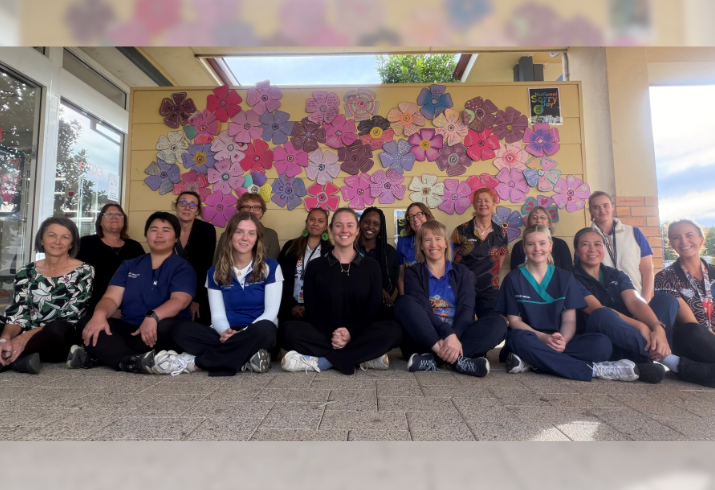 The team at Narrogin Health Service
The team at Narrogin Health Service stood in solidarity with Aboriginal staff and community members for this year’s National Sorry Day.
To acknowledge the day, staff decorated paper native hibiscus flowers in shades of purple and displayed them outside of the hospital to raise awareness of National Sorry Day and National Reconciliation Week.
The theme for National Sorry Day, ‘From Sorry to Action’ is an important reminder that saying sorry must be backed up by action. Each member of the team wrote pledges on the petals of their hibiscus, committing to meaningful steps that will help to bring tangible change.
I pledge to acknowledge the past to heal the future.
Together let’s grow a future where respect, healing and reconciliation bloom in every generation.
I pledge to be a voice for fairness and help build a future where everyone feels safe and included.
I pledge to use respectful language.
I respect every story, every culture, every person.
Southern Wheatbelt A/District Director Kristie Nottle explained the purple native hibiscus, sometimes called the Desert Rose or native cotton, is recognised as the official flower for National Sorry Day.
“The symbolism of these flowers is twofold,” Kristie said.
“Growing right across Australia, they represent the scattering of the Stolen Generations, but also, being able to survive in some of the harshest conditions, they emphasise the incredible resilience and strength of Aboriginal people."
Kangaroo stew and damper, made by Narrogin Health Service Kitchen Staff, was shared and enjoyed by all.
The team then gathered for a group viewing of the documentary, ‘Genocide in the Wildflower State’. Produced by The West Australian Stolen Generations Aboriginal Corporation, the powerful documentary educates people about the Stolen Generations and the effects of intergenerational trauma on Stolen Generations people and their families.
Clinical Midwife – Wheatbelt Aboriginal Health Service Miriam Counsel said the documentary provided important context on the challenges faced by Aboriginal people today.
“It is essential that healthcare staff are educated on the history of the trauma inflicted on Aboriginal people,” Miriam said.
“Knowing our history provides perspective and foresight and helps us to prevent repeating past mistakes.”